no plastic against you
Polyester is spun from crude oil — it holds heat, holds sweat and holds bacteria against the skin. Hemp is a plant. It sits on the body without the petrochemical layer in between.
why hemp
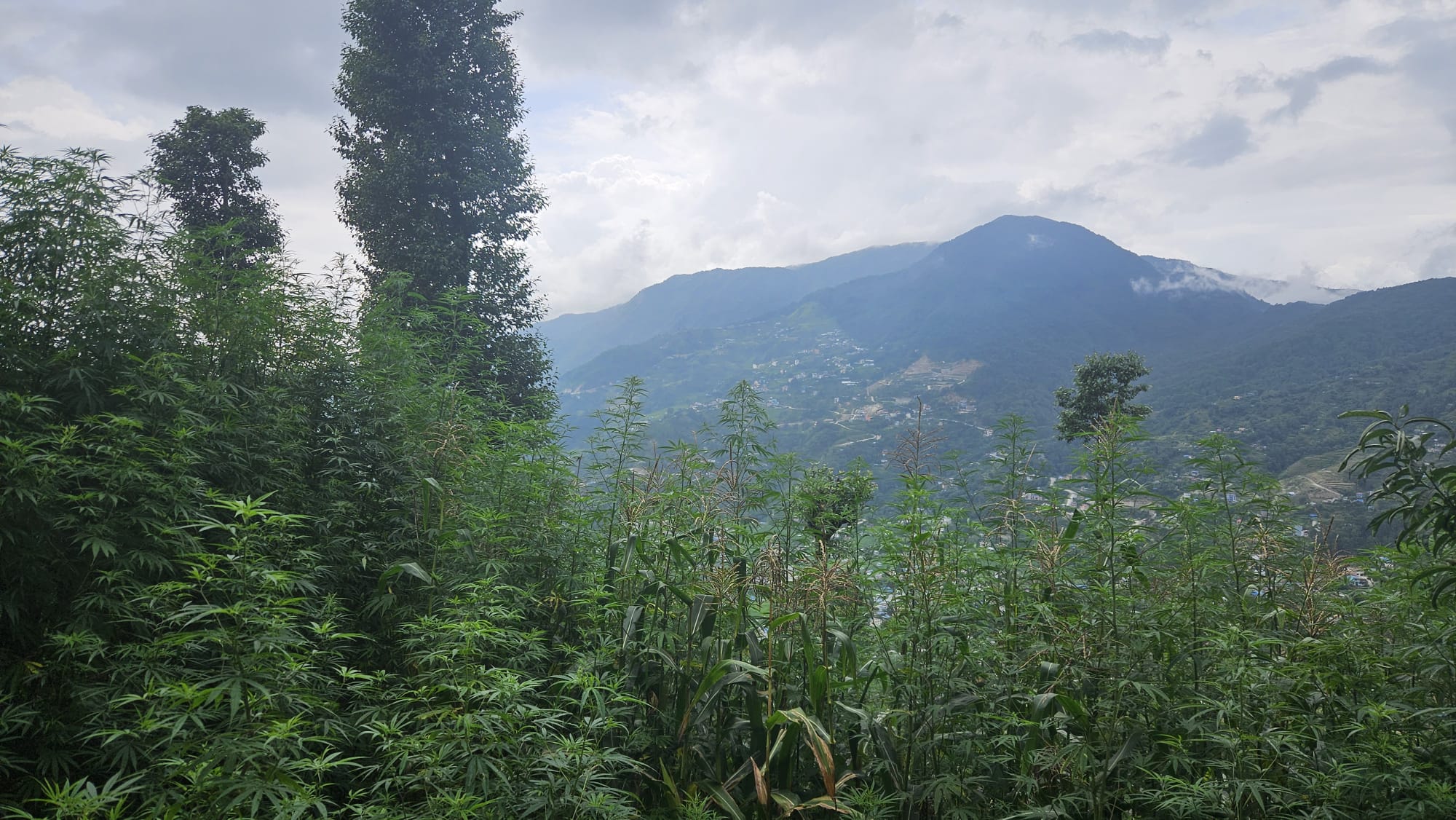
Why hemp — not polyester, not conventional cotton — is the fibre jaivik is built on. On the skin, in the wardrobe, and back to the soil.
on the skin
Clothing is the material closest to your skin, all day. It should behave like it belongs there.
Polyester is spun from crude oil — it holds heat, holds sweat and holds bacteria against the skin. Hemp is a plant. It sits on the body without the petrochemical layer in between.
Peer-reviewed testing has shown hemp fibre resists common odour-causing bacteria without chemical treatment. No day-three stench, no fabric softeners masking it.
No synthetic finishes, no formaldehyde-based wrinkle treatments, no residual pesticides. Simple fibre, simple chemistry.
breathability & durability
How hemp actually performs — when you move, sweat, wash, and wear the same piece again.
Hollow hemp fibres wick moisture off the body and release it into the air — cooler when you work, warmer when you cool down. Cotton and polyester both trap moisture at the surface.
Hemp's tensile strength is around three times that of cotton. It gets softer with every wash instead of thinning out — the fabric is designed to be worn for years, not seasons.
Hemp naturally blocks a significant portion of UV radiation without additives — a property lab-tested and consistently reported in textile research.
natural vs synthetic
The same question, asked three different ways — hemp against the plastic fibres that dominate the industry.
A plant. Cellulose, water, air, sunlight. Fully biodegradable when the garment's life ends.
Plastic filament extruded from crude oil. Sheds microplastic fibres in every wash — traceable now in oceans, rivers and human blood.
Breathable, moisture-wicking, temperature-regulating, antimicrobial. Feels like fabric.
Waterproof-ish, wind-tight, heat-trapping. Feels like a plastic bag once you actually sweat in it.
Pure hemp returns to soil in months. Feeds the ground that grows the next crop.
Estimated to persist for 200+ years in landfill. Microplastic shedding continues long before that.
environmental
The full environmental case — where the fibre comes from, what it captures while it grows, and what happens when its life with you ends.
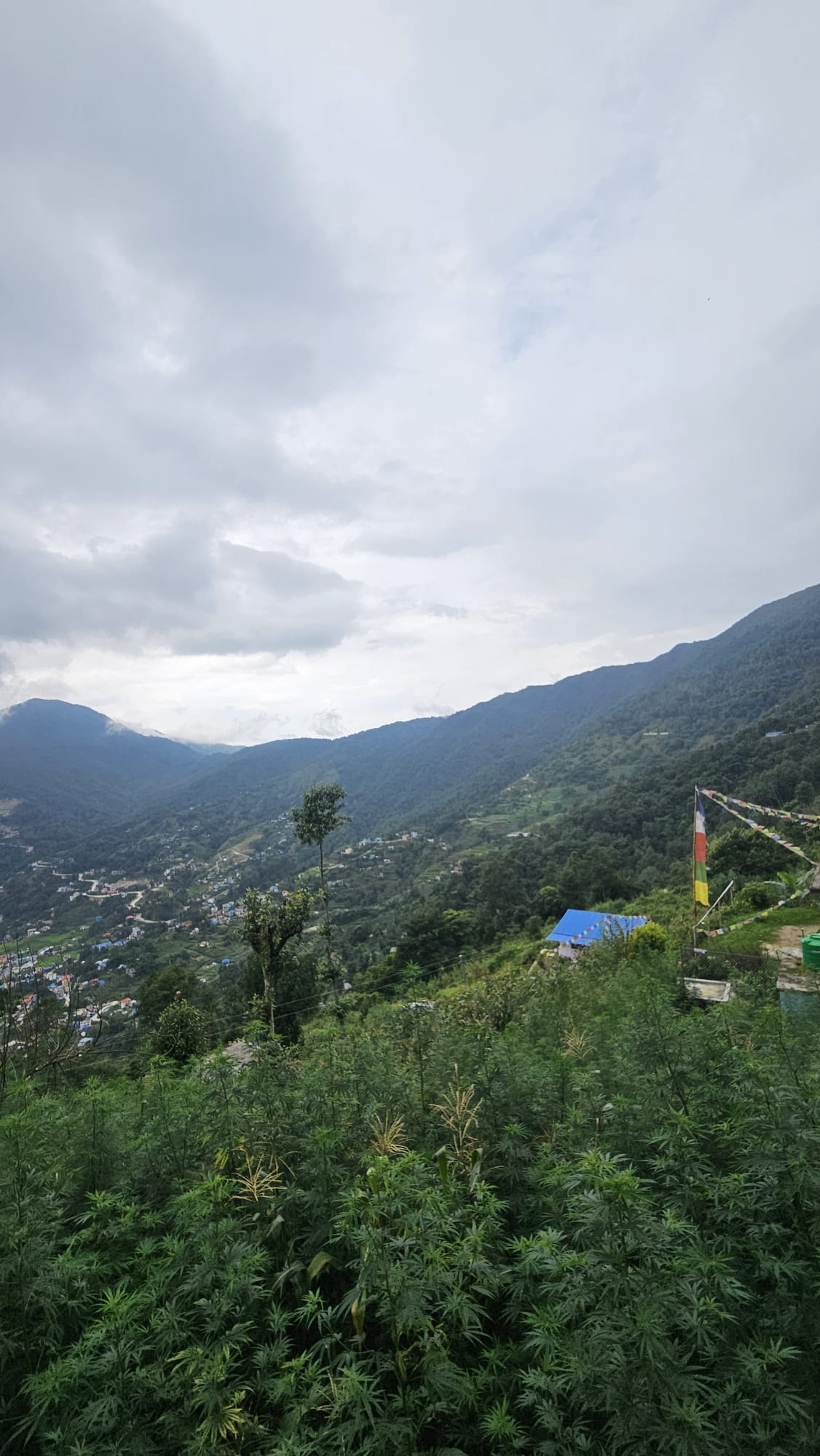
Wild-harvested hemp grows rain-fed on Himalayan hillsides — no irrigation, no pesticide, no synthetic fertiliser. Deep taproots hold the slope and cycle nutrients back into the ground.
Independent research (Stockholm Environment Institute, 2005) estimates hemp captures around 8–15 tonnes of CO₂ per hectare per growing season — one of the highest sequestration rates of any commercial fibre crop.
A pure hemp garment biodegrades in months once its life with you ends. No microplastic shedding. No landfill century. The loop closes.
research & wellbeing
Some claims about natural fibres are settled science. Others are emerging. Others are folklore. We think you deserve to know which is which.
Multiple peer-reviewed studies (e.g. Journal of Industrial Hemp, 2008; Textile Research Journal, 2018) confirm hemp fibre inhibits growth of common gram-positive and gram-negative bacteria without chemical treatment.
Independent testing consistently finds synthetic textiles (polyester, acrylic, nylon) release microfibres in washing; pure natural fibres do not. This is settled science, cited by IUCN and the European Environment Agency.
A growing but still limited body of research (e.g. papers in Frontiers in Microbiology, 2019 onwards) suggests fabric choice can influence the skin's microbial balance. Interesting, not conclusive — we're watching this closely rather than making claims.
You'll see claims online that natural fibres carry a higher “frequency” than synthetics. The most cited study (Bruyère, 2002) has not been peer-reviewed or independently replicated. We find the idea culturally interesting — hemp has been treated as a sacred fibre in the Himalayas for centuries — but we are not going to sell it to you as science.
general fibre research — not medical advice.
the problem · our solution
Five things we think are broken about mainstream clothing — and the choice we're making instead.
the problem
The industry now produces roughly 100+ billion garments per year — more than one for every two people on earth, every year. Most are worn a handful of times and discarded.
our approach
We design one set at a time, made to last for years. If we sell fewer garments and each lasts ten times longer, that is the point.
the problem
More than 60% of new clothing is now polyester or synthetic blend. It sheds microplastic in every wash and doesn't biodegrade.
our approach
We work only in pure natural fibre — starting with hemp. No blends, no plastic threads, no synthetic finishes.
the problem
Traditional brands over-produce by design — margin depends on volume. Unsold stock is landfilled or burned.
our approach
We produce to the tribe: to real people who want a real garment. Small runs, transparent quantities, no phantom stock.
the problem
Most brands cannot name the farm, the mill or the person who sewed a garment. That is by design — it protects the margin.
our approach
Every jaivik piece will be traceable to the valley, the harvester and the tailor whose hands finished it.
the problem
Cheap synthetic clothing has trained the industry — and the customer — to treat garments as disposable.
our approach
We're building a wardrobe, not a season. Fewer, better, kept — and eventually returned to the soil.
sources
Every claim above is drawn from public, independent research. Where the science is still emerging or debated, we've said so. If we ever cite a figure we can't back up, tell us and we'll pull it.
“for our skin, for our tribe, for the people who harvest it.”